From Stomach Bleed to Liver Cancer: Mdm Chua’s Care Journey
Last updated: Friday, December 26, 2025 | 6 min reading time
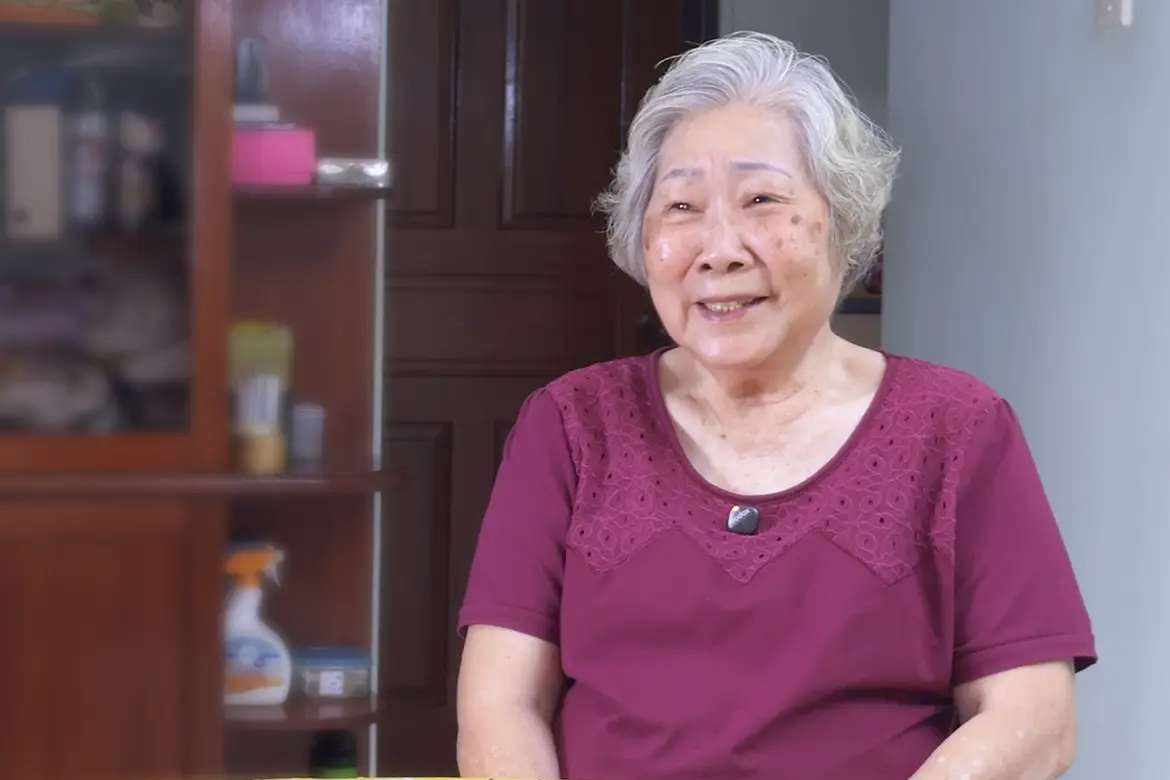
Mdm Chua Ching Moi’s vomiting episode revealed bleeding in her stomach, and later liver cancer. Her recovery journey reflects her positive spirit, and the power of coordinated care.
In February 2020, Mdm Chua Ching Moi was rushed to hospital after vomiting blood. What followed was the discovery of bleeding in her stomach, liver cirrhosis, and later, liver cancer. Her journey is one of resilience, trust, and coordinated multidisciplinary care — where timely medical attention and teamwork helped her make a smooth recovery.
When alarming symptoms appeared
It began in late February 2020, when Mdm Chua vomited blood and noticed traces of blood in her stool. Thinking it might be food poisoning, she rested at home for a day or two. But on the night of 25 February, she vomited four more times between 10 pm and 4 am — enough to alarm her family.
The next morning, her daughter brought her to a General Practitioner (GP), who advised that Mdm Chua receive care at a hospital immediately. To avoid long wait times at a public hospital, her daughter brought her to Gleneagles Hospital Urgent Care Centre.
A critical diagnosis uncovered
Upon arrival, Mdm Chua was attended by Gastroenterologist Dr Wang Yu Tien, and General Surgeon Dr Lee Chin Li. After evaluation, she was admitted to the High Dependency Unit (HDU) for urgent blood transfusions to replace the blood she had lost through the vomitting.
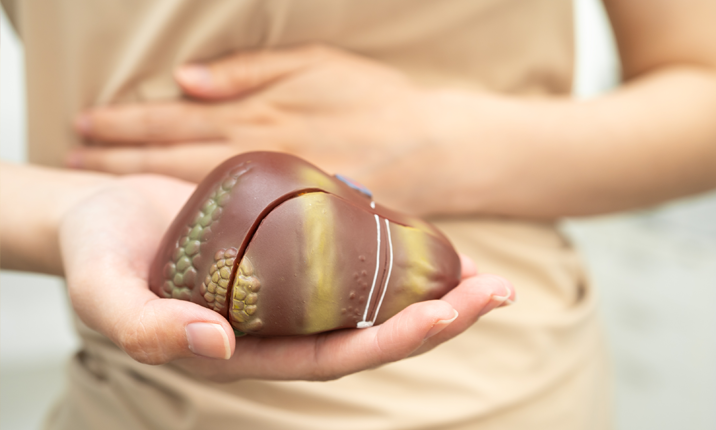
Dr Lee ordered a CT scan and blood tests to find out the cause of her bleeding – which revealed that Mdm Chua had liver cirrhosis — a condition where long-term liver damage leads to scarring that affects liver function.
Identifying and treating the cause of the bleeding
The following day at the HDU, Mdm Chua vomited blood again — this time continuously. Dr Lee ordered another emergency blood transfusion to replace the blood lost.
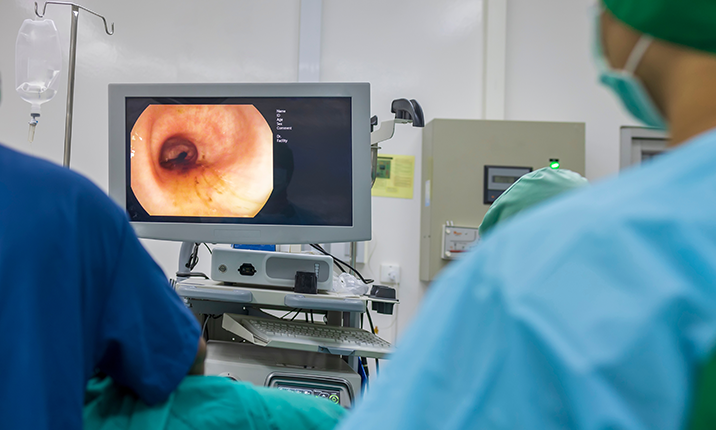
Because liver cirrhosis can cause oesophageal varices (enlarged veins in the oesophagus that can rupture and bleed), Dr Lee suspected this as a possible cause of her vomitting blood. He referred Mdm Chua to Dr Wang for a gastroscopy, to identify the exact source of the bleeding.
Just a day later, Dr Wang performed the gastroscopy — a minimally invasive examination of the upper digestive tract using a flexible camera. The gastroscopy confirmed that Mdm Chua had varices, but this was not the source of the active bleeding. Instead, the bleeding was found to be coming from another vessel in the stomach, unrelated to her liver condition.
During the same procedure, Dr Wang used endoclips — tiny metal clips applied internally — to close the bleeding vessel and stop the flow.
The coordinated response between both specialists ensured her symptoms were controlled quickly, preventing potential complications such as further blood loss or shock. Mdm Chua’s recovery also involved support from the dietitian and physiotherapy teams, who guided her on nutrition and mobility during her stay.
A second diagnosis uncovered
Patients with liver cirrhosis face a higher risk of developing liver cancer, so even after her recovery, Dr Wang closely monitored Mdm Chua’s health through regular blood tests and MRI scans.
During one such scan four years later in 2024, Dr Wang detected a small tumour behind her gallbladder and suspected it could be liver cancer. Moving fast was crucial when it comes to a suspected case of cancer, although the tumour was small in size. This was because the disease can spread if left untreated, making treatment more complicated. Dr Wang promptly referred Mdm Chua to Dr Lee Chin Li for surgical management.
Liver tumour resection: A keyhole approach
Given Mdm Chua’s stable condition, Dr Lee recommended a keyhole (laparoscopic) liver tumour resection, otherwise known as a liver hepatectomy. This is a minimally invasive procedure that would remove the tumour while preserving healthy liver tissue, and at the same time, the gallbladder, since the tumour was located behind it.
As liver failure is a potential — though rare — complication of liver resection, which can occur when too much of the liver is removed, Mdm Chua’s daughter raised her concerns with Dr Lee. He reassured her that only a small portion of the liver would be removed, and that the liver’s natural ability to regenerate would support recovery.
“Dr Lee patiently explained everything to me very clearly,” Mdm Chua recalls. She especially appreciated the care he took to ensure she understood the procedure, explaining it in Mandarin and Hokkien and using simple sketches. This helped her build trust and confidence in him.
During the procedure, Dr Lee removed the gallbladder along with approximately 15–20 percent of surrounding liver tissue.
The post-resection recovery process

After her surgery, a physiotherapist assisted her with early rehabilitation and mobility. She recovered well and was discharged three days post-surgery.
“The scar was very small,” Mdm Chua remarked, noting one of the key effects of minimally invasive surgery. “My daughter even commented that she could barely see it.”
A third diagnosis — and a different treatment path
About nine months later in 2025, during a routine follow-up with Dr Lee, a second tumour was discovered. This one was deeper within the liver, approximately 2 cm in size, and appeared malignant.
Dr Lee assessed that while another surgery was possible, it would involve cutting through more liver tissue and carried greater risks. Instead, he recommended microwave ablation — a minimally invasive technique that destroys tumour cells with targeted heat.
Because the tumour was small (less than 3cm in size) and located deeper in the liver, ablation was considered safer and more effective.
“Age was not the deciding factor,” Dr Lee explained. “We chose the treatment based on tumour location, size, and the condition of the liver. Each patient’s plan must be tailored for the safest and most positive outcome.”
Radiologist Dr Yee Yong Chen performed the procedure. With physiotherapy support afterwards, Mdm Chua was discharged within 2–3 days and returned for follow-up a month later.
A life regained
Today, Mdm Chua continues her regular follow-ups and enjoys spending time with her family.
Her journey is a testament to early detection, expert multidisciplinary care, and her positive spirit.
“I’m thankful to my doctors and my family,” she says. “Their support has given me the strength and reassurance to continue living my life.’
The importance of collaborative care for complex conditions
Reflecting on Mdm Chua’s case, Dr Lee Chin Li, General Surgeon, explains, “When we manage cancer patients, the care must be multidisciplinary. Every specialist brings unique expertise, and we discuss each case together to design a plan tailored to the patient — one that achieves the safest outcome with the least risk.”
We’re grateful for being able to follow Mdm Chua’s journey that highlights how coordinated care across multiple specialists — from gastroenterology to general surgery and radiology — can make a real difference in detecting and treating complex conditions like liver cancer early before it spreads. Her case also demonstrates the benefits of minimally invasive treatments, including faster recovery, less pain, shorter hospital stays, and smaller scars.
If you experience symptoms such as unexplained vomiting of blood, dark stools, or persistent abdominal discomfort, seek medical attention promptly. Early diagnosis and intervention can help prevent complications and improve recovery outcomes.
Gleneagles Hospital Centre for Digestive Health
From persistent heartburn to complex liver conditions, digestive issues can affect your comfort and confidence in daily life. At Gleneagles Hospital, our experienced team brings together advanced diagnostics and compassionate, coordinated care — all under one roof. Start your journey towards digestive well-being today.
Find a specialistRelated Articles
View all
A Heart Surgery that Does Not Cut Your Chest Open
A pioneering surgery for heart disease is proving quicker and safer than conventional alternatives.
Interbody Fusion: A Minimally Invasive Procedure for Spinal Problems
Dr Benjamin Tow, orthopaedic surgeon, Mount Elizabeth Hospital shares how interbody fusion can help with your back problem.

Aortic Aneurysm Symptoms and Treatments
Aortic aneurysms can be silent killers. Learn about its signs and how to treat it.
Take Charge, Take Action: Conduct Your Own Breast Examination
A monthly breast self-examination 7 – 10 days after your period starts can save your life.

The Price of Overindulgence: Alcohol and Liver Damage
Dr Desmond Wai explains how drinking too much alcohol can cause serious liver damage.

Coronary Artery Disease: How Stents Prevent Heart Attacks
Heart stents open blocked arteries (that can cause heart attacks) and lessen the risk of clogged arteries in the future. Cardiologist Dr Lim Yean Teng talks us through the procedure and how it prevents heart disease.