Dr Kojodjojo Pipin
Cardiologist


Source: Getty Images
Cardiologist
Does your heartbeat or pulse feel irregular, faster than what you normally expect or just not its usual self? We can expect to feel our heart fluttering when we are anxious, excited or upset, but if this repeatedly occurs during inexplicable or unexpected circumstances, you should not ignore it. You may be experiencing the most common arrhythmia diagnosed in clinical practice, atrial fibrillation (AF or AFib).
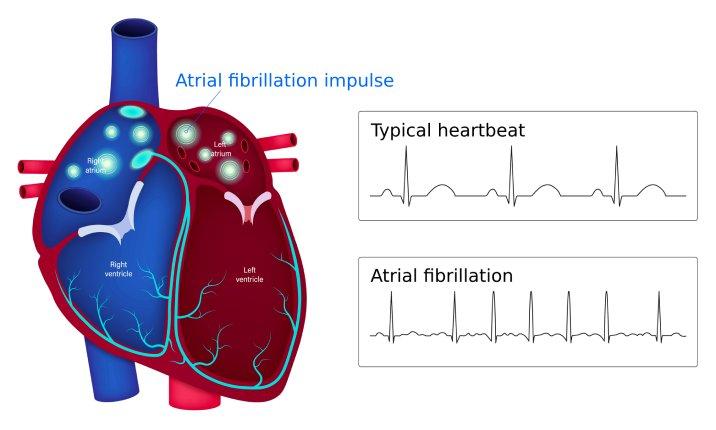
Atrial fibrillation (AF or AFib) is a common heart rhythm disorder characterised by an irregular and often rapid heartbeat. In this condition, irregular electrical impulses cause the heart's upper chambers (the atria) to quiver instead of contracting effectively. This causes blood to stagnate in the atria and makes you prone to form blood clots.
When a blood clot dislodges and travels to the brain, it results in a stroke. Aside from a 500% increase in stroke risk, atrial fibrillation increases the risk of heart failure and sudden death.
Atrial fibrillation is a serious condition that should not be ignored as it can be life-threatening if left untreated. The strokes caused by atrial fibrillation often cause significant disability and loss of independent living.
Unfortunately, atrial fibrillation cannot heal independently and will only worsen with time. To manage atrial fibrillation for the vast majority of patients, we aim to prevent the formation of blood clots (and, therefore, strokes) and restore normal heart rhythm.
A simple-to-use bedside score, called the CHADS₂-VASc score, can help to predict an individual’s stroke risk. It considers your age, gender, whether you have hypertension, diabetes, previous strokes, disease of your blood vessels, and heart failure. Based on this score, your doctor will recommend whether you need to take specific blood thinners to prevent blood clot formation and thus, strokes.
Some patients cannot tolerate blood thinners and may be advised to undergo a minimally invasive procedure called left atrial appendage occlusion. The left atrial appendage is the source of 95% of blood clots in atrial fibrillation patients. By permanently sealing off the left atrial appendage with an umbrella-like device, patients can get the same level of stroke prevention as those taking blood thinners long-term.
Treatment options to restore normal heart rhythm include:
Catheter ablation is the most common performed procedure for heart rhythm disorders globally. Each year, more than 300,000 patients worldwide undergo catheter ablation for atrial fibrillation. Traditionally, atrial fibrillation ablation has been performed using technologies that either heat or freeze the heart tissue. Whilst effective for treating atrial fibrillation, there is a small (<1%) risk of collateral damage to structures around the heart. The search for safer energies to perform atrial fibrillation ablation led to the invention of pulsed field ablation (PFA).
PFA utilises high density, high-voltage electrical pulses to treat specific areas of the heart responsible for causing atrial fibrillation.
PFA allows for more targeted treatment, at least 50-75% shorter operating times, and enhanced safety. PFA specifically targets cardiac tissue while sparing nearby structures like blood vessels, nerves, and connective tissue. Hence, the risk of collateral damage is eliminated.
Pulsed field ablation is a minimally invasive procedure performed during sedation or general anaesthesia. You will not be awake during the procedure.
Typically, a pulsed field ablation procedure can last between 45 -- 90 minutes, depending on the patient’s complexity.
If you have an irregular heartbeat, don’t hesitate to get it checked. Understanding the cause of your irregular heartbeat is essential in ensuring appropriate treatment and avoiding long-term complications. Speak to a cardiologist today.
Whether it’s a routine check-up or a complex procedure, our heart specialists deliver care with skill, compassion, and modern medical techniques. Trust our experienced team to guide you forward with expertise that evolves, and care that endures.
Learn more
Heart attack symptoms in women are often 'silent' but the consequences of not noticing them can be life threatening. Besides frequent heart screenings, knowing the signs can help prevent heart attacks.

This is a phenomenon that has been rearing its head much more in recent years. Athlete or not, it is important to understand its possible causes.

Heart attacks are the 2nd most common cause of death after cancer in Singapore – but help is available for if you are diagnosed and treated early.

Various kinds of jobs create different types of stress, and whether the stress becomes harmful depends on the individual.

Complications arising from diabetes and Peripheral Arterial Disease often result in patients losing a limb, but it does not have to be that way.

It’s not unusual to hear of professional athletes suffering a heart attack at the peak of their game. Cardiologists can provide expert advice to athletes.
Parkway East Hospital is part of IHH Healthcare, one of the world’s largest integrated healthcare networks.

Download the MyHealth360 app to access an array of medical services conveniently.


Get trusted medical advice from our specialists, dietitians and physiotherapists directly in your inbox.
Subscribe