


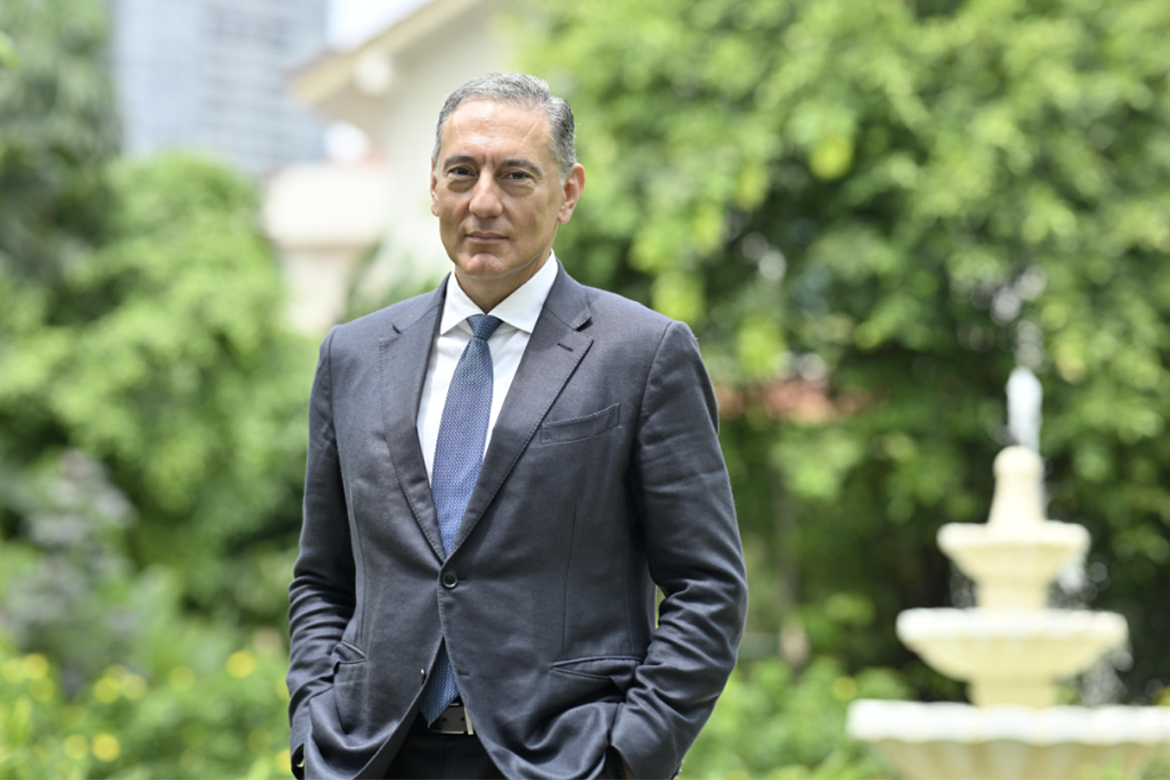
Dr Kofidis Theodoros
Cardiothoracic Surgeon

 Add as a preferred source on Google
Cardiothoracic Surgeon
With over 30 years in cardiothoracic surgery and two decades dedicated to minimally invasive techniques in Singapore, (Adj) Prof Theodoros Kofidis brings deep expertise and a passion for offering patients a less traumatic path through heart surgery.
At Mount Elizabeth Hospital, (Adj) Prof Kofidis leads advanced minimally invasive and endoscopic heart surgery, performing keyhole procedures for conditions ranging from mitral and aortic valve disease to coronary artery bypass and complex multi-valve surgery. His area of expertise is mitral valve repair – preserving the patient’s own valve rather than replacing it – and his team has developed 12 new repair techniques from Singapore that are now adopted by surgeons worldwide.
Beyond clinical practice, (Adj) Prof Kofidis has published articles in international journals and authored a minimally invasive cardiac surgery textbook with integrated QR-code video demonstrations. Novel surgical instruments, including a new camera retractor system, have been developed under his leadership, alongside innovative repair techniques such as the “Roman Arch” and “Corset” methods, which are now being adopted by surgeons in the United States, France, and across Asia.
In this interview, he shares insights on minimally invasive heart surgery, addresses common myths, and reflects on his values, philosophy, and the depth of expertise within the heart team at Mount Elizabeth Hospitals in Singapore.
I have always been more of a hands-on person who needed something direct, something dramatic and intense. To give you an analogy, I’m not the one who will paint the wall; I want to be the one who takes the bricks and puts the wall together. I needed action – I was this way since I was young. I wanted my help to be drastic and immediate. Heart surgery, being such a discipline, gave me all the framework to enjoy myself by helping patients. And that continues to motivate me every day.
In short, minimally invasive heart surgery means we avoid opening the chest bone to address the heart disease. Instead, we work through small keyholes – small incisions measuring just a few centimetres on the side of the chest – without breaking any bones.
For the mitral valve, we approach from the right side; for the aortic valve, from the front; and for bypass surgery, from the left side. We can perform these procedures, and combinations of them, without ever opening the sternum. And because of that, we’re not just offering different surgery – we’re offering the patient a different journey through their treatment and recovery.
When you do traditional open surgery, the patient must watch how they sleep for 4 to 6 weeks – no sleeping on the side. They can’t drive, can’t lift weights, can’t swim, can’t ride a bicycle. There is more pain, and even breathing deeply or coughing can be uncomfortable. Eventually, everything comes back to normal, but the path of recovery is longer.
With minimally invasive cardiac surgery, the trauma is minimal. Instead of opening the chest bone, we make a small incision between the ribs on the side. Less trauma means less bleeding, less risk of infection, less pain, a shorter hospital stay, faster mobilisation, and better lung function.
The main benefit is that recovery tends to be relatively quick. Many patients are able to return home within a few days and gradually resume normal activities like walking, climbing stairs, swimming, and driving.
Overall, the experience – not just the surgery itself – is smoother and more manageable.
Almost all heart conditions can be treated minimally invasively. That means mitral valve disease, aortic valve disease, tricuspid and pulmonary valve disease, combinations of these, irregular heartbeats, and – most importantly – coronary artery disease, meaning blockages in the arteries of the heart. Many people don’t realise that minimally invasive bypass surgery is very much possible.
Most mitral valve cases can be done minimally invasively – whether it’s a repair or a replacement. The same goes for tricuspid valve, holes in the heart, and aortic valve – I can’t remember the last time I had to fully open a sternum for an aortic valve; it’s that rare.
For bypass surgery, the majority of patients with coronary artery disease qualify. Those who may not be candidates include patients with prior chest irradiation, severe asthma, or very advanced coronary disease where the heart function has dropped significantly after multiple heart attacks. But these are not the majority.
The platform of minimally invasive surgery gives us the ability to truly personalise treatment. We look at every case individually – comorbidities, whether the patient has had prior irradiation, how advanced the disease is, heart function – and decide what’s best. It may be open surgery if the disease is very advanced. It may be a minimally invasive approach with the incision positioned according to that patient’s specific condition.
Or it may be a hybrid procedure – for example, a patient I saw recently had certain arteries stented by a cardiologist, and was then referred to me to complete the treatment with a minimally invasive bypass. We call this hybrid, meaning a combined approach between cardiologists and heart surgeons, where the patient enjoys the best of both technologies. There is a spectrum of solutions available, and we work with each patient to find the right one.
We are human, and many times our decisions are influenced by fear. I like to say that fear stands for “false evidence appearing real.” If a patient keeps thinking they’ll suffer terrible complications, they get deterred from making the right decision – one that could win them many more years of good quality life.
The other major reason is that patients may not always receive complete information about the full range of treatment options available to them.
Minimally invasive cardiac surgery is a highly specialised field, and not all centres offer it, so patients may not be aware it's an option for their condition. This can lead to confusion and delay. And if they delay, their condition worsens; they may end up in heart failure. The best time to act is when the patient is still in good condition – fix the problem and get on with life.
The first misconception is that it’s new – it’s not true; it’s been practised in advanced centres worldwide for 30 years. The second is that it’s experimental – also not true.
The third is that the surgeon cannot see well enough through the small incision – this is false. The 3D cameras and magnification technologies we use today actually show us the pathology in far greater detail than the naked eye.
Minimally invasive cardiac surgery is practised widely in Germany, where most valve surgeries are done this way, as well as in Switzerland, France, the UK, the United States, Japan, and Taiwan. A lot of my patients come to me having been told these things, and I want to reassure them: we’ve been doing this for years. Come, talk to us, and see whether you qualify.
Minimally invasive surgery is a high-tech operation. You can’t simply decide one day to offer it – you need years of high-volume training and specialised equipment: endoscopic cameras, holders, stabilisers, and sometimes a hybrid operating theatre where cardiologists and heart surgeons can work side by side.
At Mount Elizabeth Hospitals, the foundation is strong; it has a well-established surgical expertise, and the team provided all the high-tech equipment, the specialised nursing team, OT team, and ICU team.
Beyond the surgical technique itself, we employ fast-track enhanced recovery protocols. This means specialised anaesthesia, post-operative heart-specific physiotherapy, stepped-up mobilisation measures, and targeted medications – all designed to get the patient back on their feet faster.
We’ve imported these protocols from advanced centres in the United States and adapted them here. We’re not just offering a smaller incision; we’re offering an entirely different patient experience from admission through to going home and returning to daily life.
Surgical expertise is extremely important, but it’s not the only thing.
What is a good surgeon? It’s not just a superb technician. A good surgeon is someone who carries his patient by the hand and lives the journey with them throughout their hospital stay and beyond – attending to the patient and the family, using special protocols, and practising rigorous quality control.
We measure blood flow in bypasses using modern devices, record critical parts of our endoscopic procedures, and document everything in a detailed discharge letter for the referring doctor and the patient. Information must flow – we’re not keeping our knowledge to ourselves.
No programme can stand alone as a one-man show. I’m blessed to be surrounded by an excellent team at Mount Elizabeth Hospitals – specialised nurses, perfusionists, anaesthetists, ICU staff, general ward staff – who all frame the patient’s entire journey.
The cardiologist is the primary doctor – they see the patient first and assess the situation. If the disease has not reached a very advanced stage, the cardiologist may resolve it with medication or stenting.
But if surgery is needed, that's when the heart team truly comes together. We sit down, review the scans jointly, discuss the patient's overall condition and comorbidities, and map out the best approach – whether that's a minimally invasive procedure, a hybrid approach combining stenting and surgery, or in some cases, traditional open surgery.
The collaboration is continuous – before, during, and after surgery – and we adapt the post-operative treatment jointly to the best interest of the patient.
Whether you do the surgery open or minimally invasive, the most major risks – mortality, stroke, organ failure such as kidney failure – are the same.
The difference is in recovery: the speed of returning to everyday life, and avoiding complications like bleeding, infections, and arrhythmias – that’s where minimally invasive shines.
Ultimately, for the right patients, both approaches will do well in the long run. When both options are available, patients may opt for the minimally invasive approach because of the difference it makes to their recovery experience.
Some patients are so anxious that there’s no point going into too much technical detail upfront. We consult with them and their family as a team. We’re not here just to treat the pump in their body – we’re treating the soul and the whole personality as well.
We adapt our approach: open, transparent discussion, but adjusted in tone and wording to what each patient needs. We use models, iPads, and drawings to explain the disease and how we plan to address it. We share outcomes and use validated risk-assessment tools, so the patient knows exactly what their individual risk looks like.
Our job, aligned with the most fundamental Hippocratic principle, is to support the patient, take away some of their fear through thorough explanation, guidance, and encouragement. Because if we don’t proceed, the consequences will be much graver.
My main message is that minimally invasive cardiac surgery is here to stay, and it’s the way of the future.
In 10 to 20 years, we may not be doing many open surgeries anymore.
For the majority of patients, MICS is simply a more beneficial path. I hope patients can make well-informed decisions, and understand that here at Mount Elizabeth Hospitals, we have a deeply specialised, internationally recognised team that has been doing this for decades. We’re here to help.
People sometimes assume that after decades, you must have nerves of steel. It’s actually the opposite.
When we start out in our 20s and 30s, we see it almost like a sport – you want to prove to your peers that you can do it, that you can stand in the operating theatre for 10 or 12 hours. But decades later, paradoxically, I feel much more emotionally connected to my patients. My patient is now a son, a brother, a father – just as I am. I put myself in their shoes, and it costs me so much more emotionally.
How do I prepare? You must maintain your body: exercise, don’t live in the extreme, don’t stay up late before a challenging surgery. I’ve also adopted centering and breathing exercises over my 20 years living in Singapore.
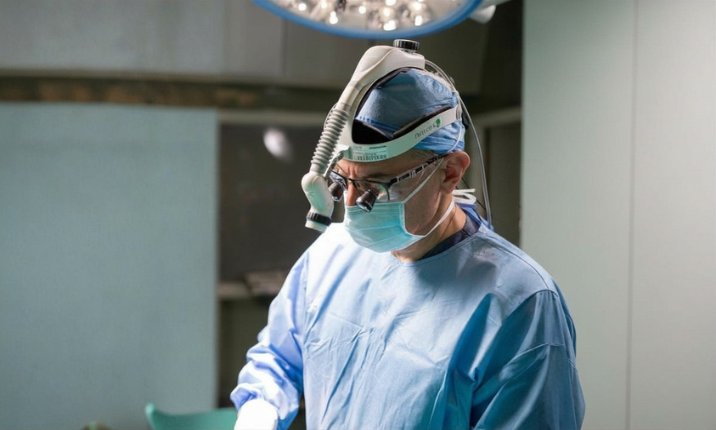
A good heart surgeon must maintain calm in the operating theatre because you’re leading 10 to 12 people – if you lose control, it’s not conducive for the patient. And I won’t be embarrassed to say this: I also pray. I believe that if a heart surgeon thinks his superb skill alone will solve every problem, he is mistaken. We bring our best love and skill, but we should also acknowledge a power greater than ourselves.
The ones that touch me most are usually young people who almost lost everything, and we managed to salvage the situation and send them back to their normal lives – to get married, have children, when their life was at stake.
One case stays with me: a young man who was handicapped and deformed, and nobody wanted or dared to operate on. We took him on, he did excellently, and we’re still friends to this day.
There are patients from other clinics, other countries, who were told “it can’t be done” or “the valve can’t be repaired.” We managed to produce a good, robust result backed by evidence and quality-assurance scans. That sense of accomplishment – for the whole team – cannot be compared with any other reward. It drives us to keep doing better.
I’m 6 feet 2 and 210 pounds – some people see me as intimidating when I enter the room!
I was raised in a different culture, but I adopted the Singaporean culture over 20 years and I’m thankful because it balanced me. I want to be remembered as somebody who does everything for his patients, who shares his knowledge rather than keeping it in his pocket.
And like everyone, I’m trying to identify my “why.” For me, it’s freedom – freedom to do the things that grow my soul space, to give back to society. That’s what drives me.
Give yourself a chance.
There is so much material out there now for every patient to learn and understand. Drop the barriers, open your mind, and study what is possible in heart surgery today. Education produces certainty. Knowledge eliminates fear and pushes away the dark clouds of insecurity. And of course, come and see us for a discussion – because that first conversation is already a step towards clarity.
At Mount Elizabeth, our cardiologists and cardiothoracic surgeons have deep expertise in treatments such as minimally invasive cardiac surgery, helping restore heart health through personalised care for your condition.
Learn more
This is a phenomenon that has been rearing its head much more in recent years. Athlete or not, it is important to understand its possible causes.

Heart attacks are the 2nd most common cause of death after cancer in Singapore – but help is available for if you are diagnosed and treated early.

Various kinds of jobs create different types of stress, and whether the stress becomes harmful depends on the individual.

Complications arising from diabetes and Peripheral Arterial Disease often result in patients losing a limb, but it does not have to be that way.

It’s not unusual to hear of professional athletes suffering a heart attack at the peak of their game. Cardiologists can provide expert advice to athletes.
We recommend the most common heart operations to beat heart disease.

Our breast surgeon explains how to understand your risk, warning signs to know, why screening matters even when you feel well, and what surgery can look like today.

As knee osteoarthritis progresses, everyday activities can become more difficult. Our pain specialist and orthopaedic surgeon explain the treatment options available and how to find the right approach for you.

Dr Edwin Chng from Parkway Shenton explains why weight loss can slow down during medical weight management, and when it may be time to review your treatment plan.

Prostate cancer is common, often silent, and still diagnosed too late in Singapore. Urologist Dr Tan Yung Khan on what every man should know about screening, diagnosis, and treatment.

We answer common questions about haze, and how this can affect common chronic lung conditions such as asthma and chronic obstructive pulmonary disease (COPD), and 8 simple tips to protect ourselves against it.

Our neurosurgeon, Dr Vincent Ng, explains the factors specialists consider when deciding whether a brain aneurysm should be monitored or treated, and what the different treatment options involve.
Parkway East Hospital is part of IHH Healthcare, one of the world’s largest integrated healthcare networks.

Download the MyHealth360 app to access an array of medical services conveniently.


Get trusted medical advice from our specialists, dietitians and physiotherapists directly in your inbox.
Subscribe