


-
-
Featured Care Areas




How Fast-Track Care Supported Henry’s Recovery From Heart Surgery
Last updated: Wednesday, July 29, 2026 | 7 min reading time
 Add as a preferred source on Google
After minimally invasive cardiac surgery at Mount Elizabeth Hospital, Henry followed a fast-track recovery protocol and returned home just days later.
Henry Gaisano was sitting in the car when it happened. He tried to take a deep breath, and it simply wouldn't come. "I suddenly felt I couldn't breathe well," the 52-year-old businessman from Cebu, Philippines, recalls. "Deep breaths weren't working."
It was the clearest warning sign yet of a heart condition Henry had lived with, largely unnoticed, since birth – and one that would eventually lead him from Cebu to Singapore, and to a decision he never expected to face: whether to open his chest for surgery, or find another way.
A warning sign mistaken for something else
Henry was born with mitral valve prolapse, a condition where the valve between the heart's left chambers doesn't close as tightly as it should. For most of his life, it stayed mild to moderate and caused him no real trouble. That changed in 2025, when he began experiencing occasional shortness of breath.
The episodes were brief, lasting only seconds, so at first Henry didn't think much of them. He also had a history of asthma, and it seemed the more obvious explanation.
What Henry did start doing was preparing for the unpredictable. "I felt anxious, and always carried my inhaler and other emergency aids that I thought could help if I ever experienced shortness of breath again," he says, "because I simply can't anticipate when it will come."
Crossing borders for a clearer diagnosis
A pulmonary specialist in Cebu eventually told Henry that his symptoms were unlikely to be lung-related, and suggested he have his heart checked instead. Work commitments got in the way of following up – until another episode in December convinced Henry and his wife that it was time to take things seriously. They decided to travel to Singapore for a thorough evaluation.
"We decided to go to Singapore because, first, it is more accessible compared to if we travel to the US,” says Henry. “Also, we had previously experienced hospitalisations here, and we find Mount Elizabeth Hospitals to be very efficient, with highly skilled doctors and nurses."
A familiar face becomes his cardiologist
Henry's connection to Mount Elizabeth Hospitals actually began earlier, through his father. Dr Kelvin Chua had changed the battery on his father's pacemaker, and Henry was struck by his thoroughness.
"He became my cardiologist because I like how he pays attention to detail and explains carefully to me all the things I need to know regarding my case,” Henry explains.
Under Dr Chua's evaluation in Singapore, the picture became clearer – and more serious than Henry had realised. In the Philippines, checks had consistently shown his condition as mild to moderate. In Singapore, tests revealed it had progressed: the valve leakage was now severe, and surgery was recommended.
The open-heart surgery he didn't want
For Henry, the thought of going for traditional open-heart surgery was something he had been dreading.
"I really did not want open-chest surgery for fear of higher risks, the pain, and longer recovery,” says Henry.
He was candid about why: a low tolerance for pain, and the anxiety of a major operation weighing on him. If open-heart surgery was the only option, he says, he would rather not have surgery at all.
An alternative he didn’t know existed
Dr Chua understood Henry's hesitation and referred him to (Adj) Prof Theodoros Kofidis at Mount Elizabeth Hospital, a cardiothoracic surgeon with over 30 years of experience and more than two decades dedicated to minimally invasive techniques in Singapore, including mitral valve repair.
"Surgery is not something you look forward to, but I had more confidence in having the surgery because it gave me peace knowing I don't have to do the open-chest surgery,” says Henry. “It means lower risk for all the complications that open-heart surgery has."
"The good news is, we can repair it"
After a consultation with Prof Kofidis, the result turned out to be the turning point in Henry's decision.
"Henry, the good news is I have seen your scans, and we can do the repair with a minimally invasive procedure,” said Prof Kofidis to Henry.
Henry had one more concern, one he'd heard from other surgeons: that a procedure might start minimally invasive, only to convert to open-chest surgery midway if complications arose. Prof Kofidis assured him that, in the hands of a highly skilled surgeon and a strong team, this would not happen – but it was something else that ultimately convinced Henry.
"The best assurance he gave was when he asked me to Google what he has done. The data speaks clearer than words – high volume cases, high success rate. I knew I was in good hands,” says Henry.
With that, Henry decided to proceed with Prof Kofidis. The logistics, he says, were smooth throughout. He and his wife arrived in Singapore the day before the procedure; surgery followed the next day.
Inside the operating theatre: the surgeon's view
From Prof Kofidis's side, Henry's case was more complex than it first appeared. The mitral valve has two leaflets – anterior and posterior – that open and close like a pair of doors. In Henry's case, the anterior leaflet was the problem.
"His anterior leaflet was, on a light-hearted note, all over the place,” explains Prof Kofidis. “He had many segments of that leaflet prolapsing, leaking. This is considered a challenging problem for mitral valve repair."
The surgical team repaired the valve by implanting artificial cords, restoring it without residual leakage – and did so through a minimally invasive approach despite the complexity of the case.
"We managed it with the implantation of artificial neochordae, and his result was excellent –no more residual leakage. And the beauty of it is that we also did it in a minimally invasive fashion.”
A fast-track recovery protocol that supported his recovery
Prof Kofidis also points to something beyond the repair itself: a fast-track recovery protocol built around physiotherapy and early mobilisation, which he calls a unique differentiator in Henry's case.
"We applied physiotherapy, early mobilisation and certain other measures, resulting in Henry staying in hospital for only three days after his surgery,” says Prof Kofidis.
“That is the future – where, with increasing technology and skill, heart surgery is going, to the benefit and delight of patients, who can be discharged easier, faster, and go back to their everyday activities without so many limitations."
The nurses who eased his anxiety
During his stay, Henry and his wife found comfort in a diverse nursing team including some who were from his home country, whose familiarity with his language and culture proved especially reassuring at stressful moments.
One moment stood out. In the ICU, Henry woke up disoriented and anxious. A Filipino nurse spoke to him calmly and explained what was happening, helping him settle. Soon after, she was able to speak with him directly – a small connection that made a difficult moment easier.
A recovery that surprised everyone
Henry and his wife had been told to expect two to three days in the ICU, followed by about five days in a regular hospital room. The reality was faster: about a day and a half in the ICU, and discharge just three days after surgery.
There was one difficult moment along the way. Coming out of anaesthesia, Henry was groggy and briefly panicked, unable to move or speak because of the breathing tube. Faster extubation, where the tube came out within two hours, was part of the fast-track protocol behind his stay.
What followed surprised even Henry. By day 3 post-surgery, he was already walking around Orchard Road, on his way to one of his favourite restaurants to celebrate. Cardiac rehabilitation began on day 4. By day 10, he was moving like his usual self. By day 13, he was lifting weights and raising his arms overhead.
"People who see him don't think he went for a major operation,” commented Henry’s family on his recovery.
A week on, feeling like himself
About a week after his surgery, Henry already felt significantly better. Prof Kofidis had told him the repair was a success, and that with proper recovery and minimal lifestyle adjustment, Henry should be able to return to normal activities.
Several of Henry's friends, who also have heart valve issues of their own, have been encouraged by his experience to get checked and consider treatment sooner rather than later.
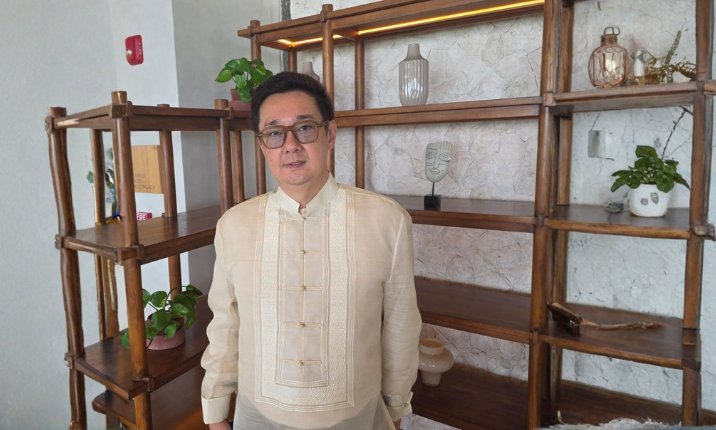
What Henry wants other patients to know
Reflecting on the whole experience, Henry says he would recommend minimally invasive cardiac surgery to patients who are suitable candidates, describing the recovery as fundamentally different from what he had feared with traditional open-heart surgery.
"From pre-op to post-care, it's important that you work with people you can trust. Ask all the questions you need to before your surgery, and don't be shy about raising your concerns – it helps to go into a major operation with peace of mind,” advises Henry.
Henry is grateful to everyone who walked this journey with him and his family – the medical team including Prof Kofidis and Dr Kelvin Chua, the nurses who cared for him after surgery, the physiotherapist who cheered him on through every exercise, and the family and friends whose love and support carried him through.
Mount Elizabeth Centre for Heart Health: Every Heart Has a Future
At Mount Elizabeth, our cardiologists and cardiothoracic surgeons have deep expertise in treatments such as minimally invasive cardiac surgery, helping restore heart health through personalised care for your condition.
Learn moreRelated Articles
View all
Sudden Cardiac Death in Modern Day Athletes
This is a phenomenon that has been rearing its head much more in recent years. Athlete or not, it is important to understand its possible causes.

How Can I Stop a Heart Attack?
Heart attacks are the 2nd most common cause of death after cancer in Singapore – but help is available for if you are diagnosed and treated early.

Is Your Job Bad for Your Heart?
Various kinds of jobs create different types of stress, and whether the stress becomes harmful depends on the individual.

Diabetes and Amputation: How to Save Your Leg
Complications arising from diabetes and Peripheral Arterial Disease often result in patients losing a limb, but it does not have to be that way.

Sports Heart Expert Tells All
It’s not unusual to hear of professional athletes suffering a heart attack at the peak of their game. Cardiologists can provide expert advice to athletes.

Top Heart Operations to Beat Heart Disease
We recommend the most common heart operations to beat heart disease.
Latest Articles
View All
Ask our Doctor: What are Breast Cancer Risks and Early Signs?
Our breast surgeon explains how to understand your risk, warning signs to know, why screening matters even when you feel well, and what surgery can look like today.

Knee Osteoarthritis: What To Do When Knee Pain Gets Worse?
As knee osteoarthritis progresses, everyday activities can become more difficult. Our pain specialist and orthopaedic surgeon explain the treatment options available and how to find the right approach for you.

Weight Loss Has Plateaued. Does Your Treatment Need to Change?
Dr Edwin Chng from Parkway Shenton explains why weight loss can slow down during medical weight management, and when it may be time to review your treatment plan.

Ask Our Doctor: How Is Prostate Cancer Detected and Diagnosed?
Prostate cancer is common, often silent, and still diagnosed too late in Singapore. Urologist Dr Tan Yung Khan on what every man should know about screening, diagnosis, and treatment.

A Guide to Haze Season in Singapore: 8 Tips to Stay Healthy
We answer common questions about haze, and how this can affect common chronic lung conditions such as asthma and chronic obstructive pulmonary disease (COPD), and 8 simple tips to protect ourselves against it.

Diagnosed With a Brain Aneurysm? Here's What Happens Next
Our neurosurgeon, Dr Vincent Ng, explains the factors specialists consider when deciding whether a brain aneurysm should be monitored or treated, and what the different treatment options involve.


