-
-
Featured Care Areas



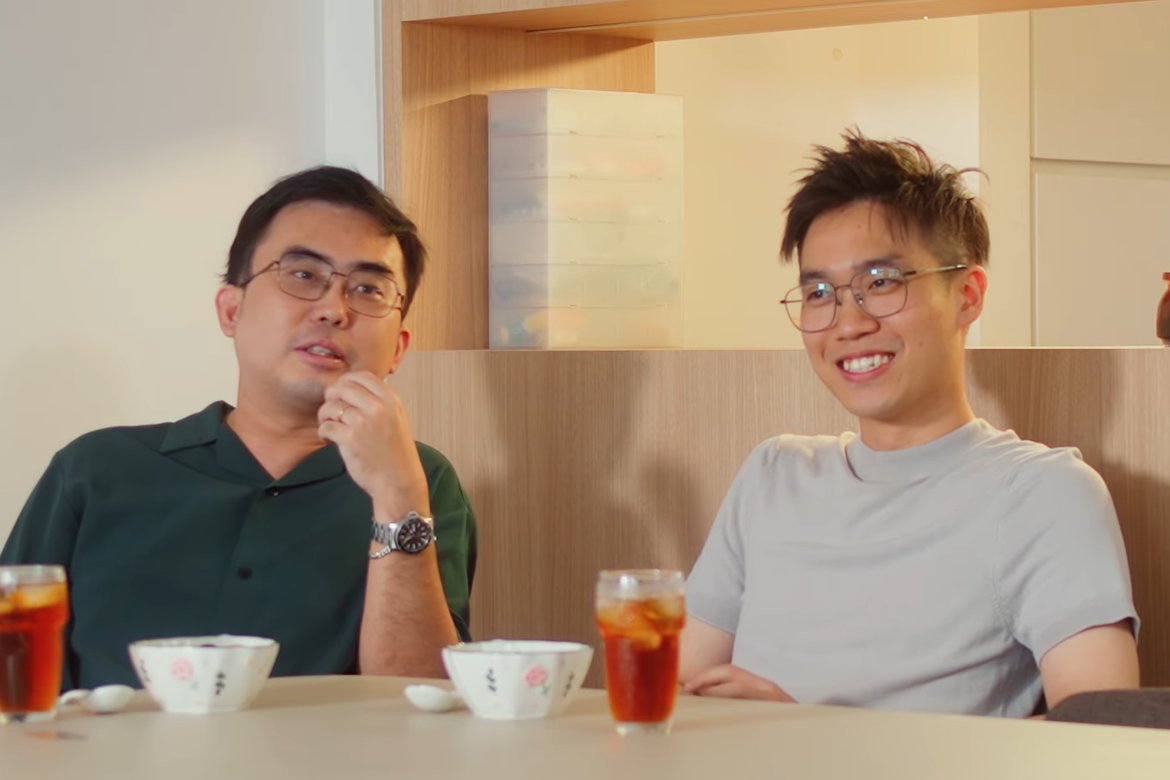
A Life-Saving Friendship: Jing Hui's Kidney Transplant Journey
Last updated: Thursday, June 11, 2026 | 7 min reading time
 Add as a preferred source on Google
When Jing Hui's kidney disease reached a crisis point, it was a colleague-turned-brother who gave him the ultimate gift – a second chance at life.
For most of his adult life, Pang Jing Hui thought he had things under control.
He had been diagnosed with IgA nephropathy – a chronic autoimmune disease that attacks the kidneys – at 18, discovered almost by accident during a pre-enlistment National Service health screening. Doctors reassured him that many people with the condition live full, unrestricted lives. So, he did just that. He completed National Service, graduated, moved to China for work in the events industry, played basketball, and largely pushed the condition to the back of his mind.
"The scary part of the disease didn't really manifest in the first 10 years," he recalls. "You don't feel the effects until it hits a certain threshold.”
But IgA nephropathy is a disease that doesn't announce itself – until it does.
When his kidney function took a sharp decline
When Jing Hui returned to Singapore and went in for what he expected to be routine pre-op checks before a hernia operation, a blood test told a different story: his kidney function had declined significantly. The condition he had been quietly coexisting with for years had worsened – likely accelerated, he admits, by inconsistent medication during his years overseas.
Between 2017 and 2021, his kidney function dropped sharply – from around 50% to below 40% – requiring increasingly intense treatment. Multiple rounds of steroids brought their own brutal side effects: mood swings severe enough that colleagues noticed and were reduced to tears; a face and body swollen from fluid retention; persistent gout so painful his wife once had to wheel him to the clinic in a borrowed wheelchair. Through it all, Jing Hui continued working, and tried as much as he could to hold things together.
By 2021, things had reached a turning point. His kidney function had fallen to around 10%, and he was symptomatic – nauseated daily, breathless after climbing a few steps, unable to eat much. His doctors told him it was time to seriously consider a kidney transplant. The alternative was dialysis, and eventually, the long public waiting list.
"As the months went by, I saw it going below 40, 50%. I knew the time would come when I would need a transplant," says Jing Hui. "Finally, it was time to face reality."
He processed the news for a few days before calling his mother. "I just told her: I need to change kidney. She was quite sad. She didn't know it had gotten that bad."
An unlikely but unshakeable bond
Jing Hui met Tew Jian En in 2015, when both were working as audio engineers at an events company. Jian En – a Malaysian then working in Singapore – had joined a few months earlier, and the two quickly discovered they shared the same sense of humour and love of music.
Knowing that Jian En was living alone in Singapore, far from his family in Malaysia, Jing Hui had invited him to spend the winter solstice at his mother's home, sharing tang yuan together. "I wanted to provide some form of comfort for my friend," says Jing Hui, 32.
Even after they moved on to different jobs, the pair stayed close – checking in regularly, supporting each other through life's shifts. Over the years, as Jing Hui's health gradually worsened, it was Jian En who accompanied him to seek alternative treatments, learned massage techniques to help manage the discomfort. The friendship only deepened through difficulty.
"Yes", without hesitation
When Jing Hui finally reached out to his most trusted circle, sharing the news that a transplant was urgently needed, Jian En had a clear thought in his mind.
"I had lost a sister to leukaemia, so I could understand how Jing Hui's family must be feeling and I wanted to help," says Jian En. He had gone to his wife first, and then his parents. Neither hesitated. His parents, shaped by the grief of losing a daughter while waiting for a bone marrow donor, understood acutely what Jing Hui's family was going through.
During a phone call with Jing Hui, Jian En did not need much time to think. His answer was simple: "Yes."
"I was very touched," Jing Hui says. "When you've been through something like this, you discover that life is very real. Even people closest to you have their own lives and fears. It's not easy to say yes to something like this."
The road to surgery: living donor kidney transplantation at Mount Elizabeth Hospital
Under the guidance of nephrologist Dr Adrian Liew and surgeon Dr Lewis Liew at Mount Elizabeth Novena Hospital, Jian En and Jing Hui walked carefully through the process ahead of them.
Living donor kidney transplantation (LDKT), where a healthy kidney is donated by a living person to a recipient whose kidneys have failed, offers significant advantages over the alternatives. Dr Adrian Liew explains why transplantation, when suitable, is the preferred outcome over dialysis:
"Dialysis takes over some part of the kidney function, but it does not totally take over the function of a native kidney and often, toxins are not removed completely from the body. These toxins continue to put the patient in a constant inflammatory state and coupled with the cardiovascular risks associated with dialysis, increase the risk of cardiovascular complications in dialysis patients."
For younger patients in particular, the stakes of prolonged wait are high. The waiting time for a kidney from a deceased donor in Singapore can stretch for years, and outcomes worsen the longer a patient remains on dialysis – which is why living donors make such a profound difference.
Both Jian En and Jing Hui, and their families, underwent thorough medical and psychological evaluation before the procedure could proceed.
"To be eligible as a living donor for kidney transplant, the individual must have good kidney function and no risk factors for kidney disease, so that the risk of them developing kidney failure after the transplant is kept to a minimum," says Dr Adrian Liew.
The CT scan, however, revealed a complication specific to Jing Hui's anatomy. Dr Lewis Liew explains: "Donor surgery is typically minimally invasive, which offers significant benefits for the donor, such as a smaller incision, less pain and a faster recovery. While the left kidney is usually preferred due to its longer blood vessels, in this case, Jing Hui's left kidney had an atypical anatomy – it had two arteries instead of the usual single artery."
As connecting the smaller blood vessels would be more difficult, Jing Hui's right kidney, with shorter blood vessels that made a keyhole approach impossible, was selected instead, necessitating open surgery.
A morning like no other
On the morning of surgery, just as Jian En was about to be wheeled into the operating theatre, his phone rang. It was his wife – calling to tell him she was pregnant.
He paused for only a moment. Then he went ahead.
"I told him: if you don't want to go ahead, it's OK," says Jing Hui. "But he and his wife decided together. That's the kind of person he is."
The transplant was successful. Jian En's kidney began working in Jing Hui's body almost immediately – a sign his body had accepted it well.
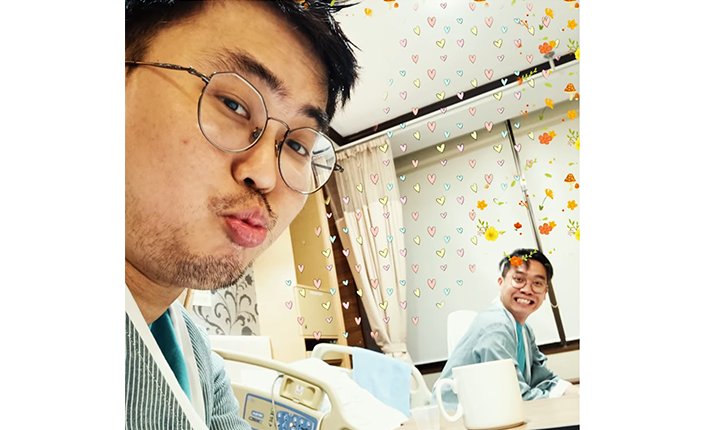
"Kidneys from living donors generally begin working immediately, allowing recipients to recover in a matter of days and avoid the need for dialysis," explains Dr Lewis Liew.
One sign of just how well: the dramatic, almost instant release of fluid that Jing Hui's body had been retaining. The gout that had plagued him for years disappeared after the procedure. The nausea lifted. He could eat. He could breathe without effort.
Life after transplant – and a bond that only deepened
Today, Jing Hui is healthy, energetic, and a father of two daughters, aged four and two. Jing Hui has since welcomed his own child.
Jing Hui remains on immunosuppressants to prevent his body from rejecting the kidney, and takes care to avoid undercooked food and crowded spaces without a mask. Jian En has been advised to avoid high-impact contact sports that could injure his remaining kidney.
But as Dr Adrian Liew puts it: "Otherwise, they can continue living a normal life. Both of them are doing well and have good kidney function."
Both men remain in regular contact with Dr Adrian Liew, with direct access to his guidance – important given that even common cold medications can interact with Jing Hui's post-transplant drugs.
Beyond their health, the bond between the two families has only strengthened. They spend time together regularly – outings, visits, their children playing together.
"You never know who in your life that you cross paths with will become like a brother to you," says Jing Hui. "I am very touched by what he did for me."
For Jian En, reflecting on whether it was all worth it, the answer comes simply: "I would never regret my decision. Seeing Jing Hui's's daughter, I feel it was worth it."
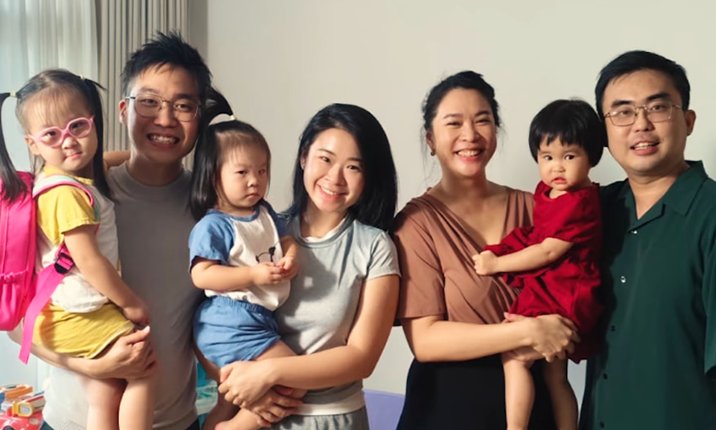
Left: Jian En and his family. Right: Jing Hui and his family, 5 years after the living donor kidney transplant.
What you should know about living donor kidney transplants
For patients with end-stage kidney failure in Singapore, the road to a transplant can be a long one.
The average waiting time for a kidney from a deceased donor is 8 – 9 years, and with over 400 people currently on the national transplant waiting list, many patients face years of dialysis and uncertainty before a suitable kidney becomes available.
A living donor kidney transplant (LDKT) offers a second chance at life, and a better quality of life.
A healthy kidney is donated by a living person – someone biologically or emotionally related to the recipient – and transplanted in a planned, timely procedure. On average, the entire process takes around 3 – 6 months from start to surgery, giving patients the chance to receive a new kidney before their health deteriorates further.
In Singapore, kidney transplant recipients have an 84.8% 10-year survival rate*, and at least 90% of transplanted patients do well after surgery**. While every patient's journey is different, these outcomes reflect the progress that modern transplant medicine has made – and the real difference it can make to patients and their families.
If you or a loved one is living with chronic kidney disease, speaking to a specialist early can open doors to options you may not yet know are available.
*Source: Singapore Renal Registry, via SingHealth
**Source: Singapore Renal Registry Annual Report 2019
Mount Elizabeth Kidney Transplant Programme
At Mount Elizabeth Hospitals, our specialists are experienced in living donor kidney transplantation, supported by multidisciplinary expertise and personalised care tailored to your condition.
Learn moreRelated Articles
View all
Advanced Techniques for the Treatment of Kidney Cancer
Kidney cancer is a silent killer, with symptoms usually only showing up in its late stage. Learn about its causes and treatment.

How to Recognise Kidney Failure: Symptoms, Causes & Treatment
Dr Akira Wu, renal physician at Mount Elizabeth Hospital, explains what kidney failure is, what causes it and what symptoms to look out for.

Diabetes and Your Kidneys: 10 Things to Know
Poorly-controlled diabetes can negatively impact various organs over time. Here are 10 things to know.

Bubble Trouble: What You Need to Know About Kidney Cysts
It can be worrying to find out you have a kidney cyst, especially as the condition does not always come with symptoms. Dr Tan Yau Min clarifies what you need to know.
Do You Need Kidney Stone Surgery?
What are kidney stones and what is a common and safe procedure to remove them?

Life After a Kidney Transplant – Dietary Advice to Know
Your body needs extra care and nutrition after kidney transplant. You may have to make changes to your diet to meet your specific needs and tolerances.
Latest Articles
View All
Ask our Doctor: What are Breast Cancer Risks and Early Signs?
Our breast surgeon explains how to understand your risk, warning signs to know, why screening matters even when you feel well, and what surgery can look like today.

Knee Osteoarthritis: What To Do When Knee Pain Gets Worse?
As knee osteoarthritis progresses, everyday activities can become more difficult. Our pain specialist and orthopaedic surgeon explain the treatment options available and how to find the right approach for you.

Weight Loss Has Plateaued. Does Your Treatment Need to Change?
Dr Edwin Chng from Parkway Shenton explains why weight loss can slow down during medical weight management, and when it may be time to review your treatment plan.

Ask Our Doctor: How Is Prostate Cancer Detected and Diagnosed?
Prostate cancer is common, often silent, and still diagnosed too late in Singapore. Urologist Dr Tan Yung Khan on what every man should know about screening, diagnosis, and treatment.

A Guide to Haze Season in Singapore: 8 Tips to Stay Healthy
We answer common questions about haze, and how this can affect common chronic lung conditions such as asthma and chronic obstructive pulmonary disease (COPD), and 8 simple tips to protect ourselves against it.

Diagnosed With a Brain Aneurysm? Here's What Happens Next
Our neurosurgeon, Dr Vincent Ng, explains the factors specialists consider when deciding whether a brain aneurysm should be monitored or treated, and what the different treatment options involve.