


Dr Chan Wan Xian
Cardiologist


 Add as a preferred source on Google
Cardiologist

Cardiologist
Heart disease is sometimes thought of as a man's condition, but it isn’t.
According to the Singapore Heart Foundation, cardiovascular disease causes around 1 in 3 female deaths in Singapore each year, making it one of the leading causes of death among women here. Cardiovascular disease accounted for 30.5% of all deaths in Singapore in 2024.
Awareness has not kept pace. In the Singapore Heart Foundation's 2024 Women's Heart Health Survey of 1,000 women, about 40% still believed breast cancer was the leading cause of death in women.
The difficulty is that heart disease in women is frequently missed. Symptoms can be subtler or simply different from the classic presentation described in men, and they are easy to attribute to stress, ageing, indigestion or being unfit. Women themselves often delay seeking help, and the delay matters: by the time heart disease is picked up, it may be more advanced.
Understanding how heart disease shows up in a woman's body, what raises your risk, and when to get checked can make a real difference to outcomes.
Women's symptoms are more likely to be atypical and attributed to something else.
Women are more likely to have conditions affecting the heart's smaller blood vessels, which standard tests looking at the major arteries may not detect. And women tend to present later, which narrows the treatment options available.
This is not only a Singapore issue.
A 2024 review in the Journal of the American College of Cardiology described under-recognition, under-treatment and under-representation in research as a global pattern in women's cardiovascular care.
Partly. The common symptoms of heart disease occur just as often in women as in men, including central chest discomfort or tightness, pain spreading to the neck, jaw or back, and breathlessness. Women should not assume that chest pain is a male symptom.
What differs is that women are more likely to also experience symptoms that do not obviously point to the heart, and more likely to have these as their main or only complaint. Women also tend to develop heart disease around a decade later than men, with risk rising notably from perimenopause onwards, typically from the mid-40s.
Yes, and the increase appears to begin earlier than many women expect. It is not menopause itself that marks the turning point so much as perimenopause, the transition into it, which typically begins in the mid-40s.
An analysis of more than 9,000 women published in the Journal of the American Heart Association in 2026 scored participants using the American Heart Association's Life's Essential 8 measures of cardiovascular health.
Median scores declined across reproductive stages: 73.3 out of 100 in premenopausal women, 69.1 in perimenopausal women and 63.9 after menopause. After the effect of ageing was accounted for, perimenopausal women were twice as likely to have a low overall cardiovascular health score compared with premenopausal women, driven largely by higher cholesterol and blood sugar levels.
That distinction matters. Some of the rise in risk is simply ageing, which affects everyone. But the evidence indicates the hormonal transition contributes on top of that. A 2020 American Heart Association scientific statement drew the same conclusion, describing the menopause transition as a period of accelerating cardiovascular risk and a critical window for early prevention.
The practical implication is that your 40s are not too early to establish a baseline. Blood pressure, cholesterol and blood sugar are worth checking during perimenopause rather than waiting until after menopause to start paying attention.
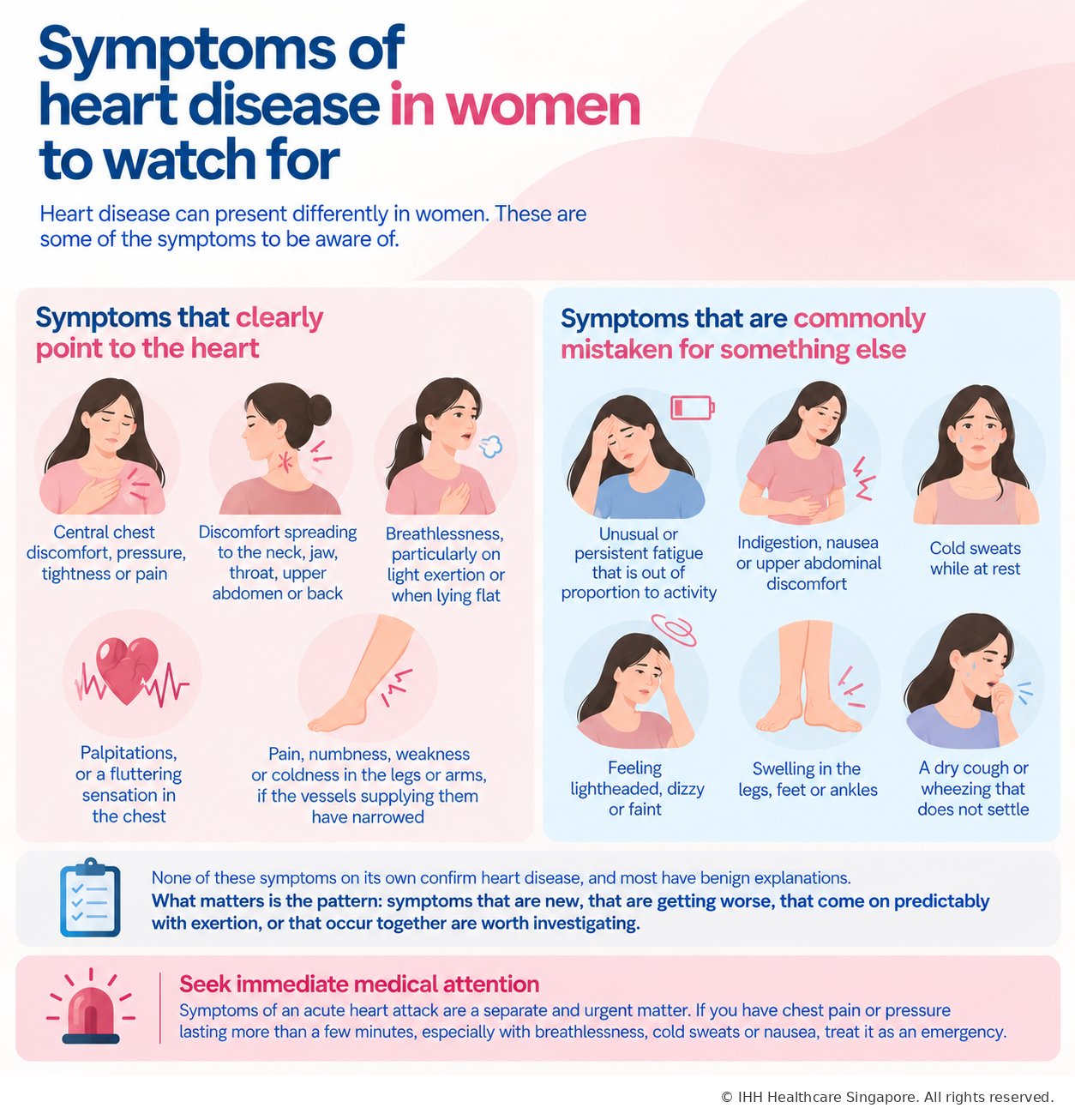
Symptoms that clearly point to the heart:
Symptoms that are commonly mistaken for something else:
None of these symptoms on its own confirm heart disease, and most have benign explanations. What matters is the pattern: symptoms that are new, that are getting worse, that come on predictably with exertion, or that occur together are worth investigating.
Symptoms of an acute heart attack are a separate and urgent matter. If you have chest pain or pressure lasting more than a few minutes, especially with breathlessness, cold sweats or nausea, treat it as an emergency. Read more about the signs of a heart attack in women and what to do.
The most common heart condition in women is coronary artery disease, a narrowing of the blood vessels supplying the heart. Other conditions include:
Several cardiovascular conditions disproportionately affect women or are unique to pregnancy. These conditions are also relevant to women in Singapore:
Some risk factors cannot be changed:
Some medical conditions raise heart disease risk in both men and women:
Other risk factors are specific to women, or affect women more than men.
Dr Deanna Khoo, cardiologist at Gleneagles Hospital, notes: "Beyond the conventional risk factors shared with men, women have several risk factors of their own: early menopause, complications during pregnancy, previous breast cancer treatment, and autoimmune conditions, which are more common in women. These are often overlooked, but they matter just as much for long-term heart health."
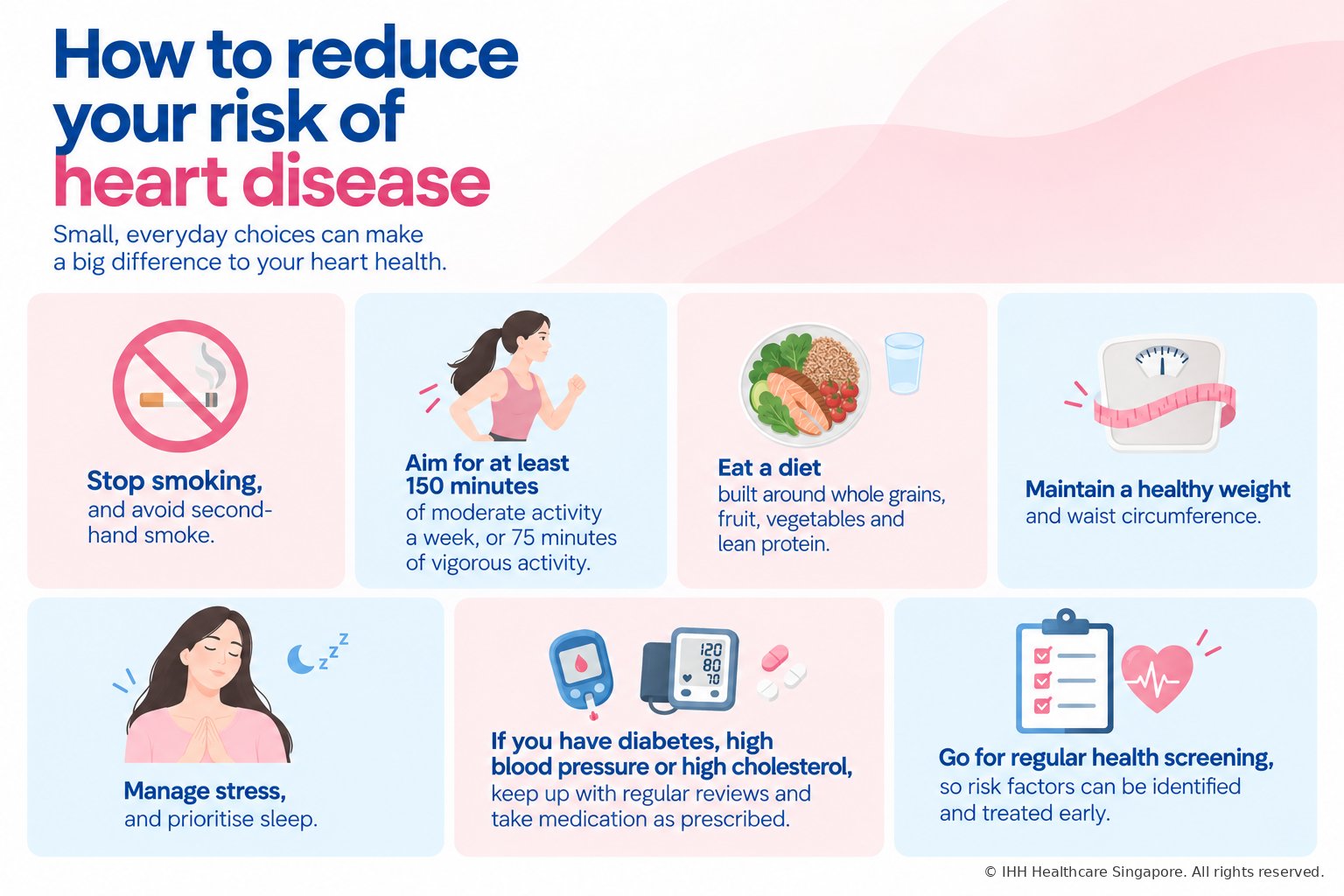
And some risk factors are within your control: a diet high in saturated fat, salt and sugar, physical inactivity, chronic stress, smoking, and drinking too much alcohol.
Assessment usually starts with your history, symptoms and risk factors, followed by some combination of:
Make an appointment with our cardiologists if you have new, recurring or worsening chest discomfort, breathlessness, palpitations, unusual fatigue or swelling in the legs, particularly if you also have risk factors such as diabetes, high blood pressure, high cholesterol, a history of pregnancy complications or a family history of heart disease.
Women's heart health deserves the same attention and urgency as any other area of women's health. Knowing your risk factors, knowing your numbers, and knowing your own body well enough to notice when something has changed.

This is a phenomenon that has been rearing its head much more in recent years. Athlete or not, it is important to understand its possible causes.

Heart attacks are the 2nd most common cause of death after cancer in Singapore – but help is available for if you are diagnosed and treated early.

Various kinds of jobs create different types of stress, and whether the stress becomes harmful depends on the individual.

Complications arising from diabetes and Peripheral Arterial Disease often result in patients losing a limb, but it does not have to be that way.

It’s not unusual to hear of professional athletes suffering a heart attack at the peak of their game. Cardiologists can provide expert advice to athletes.
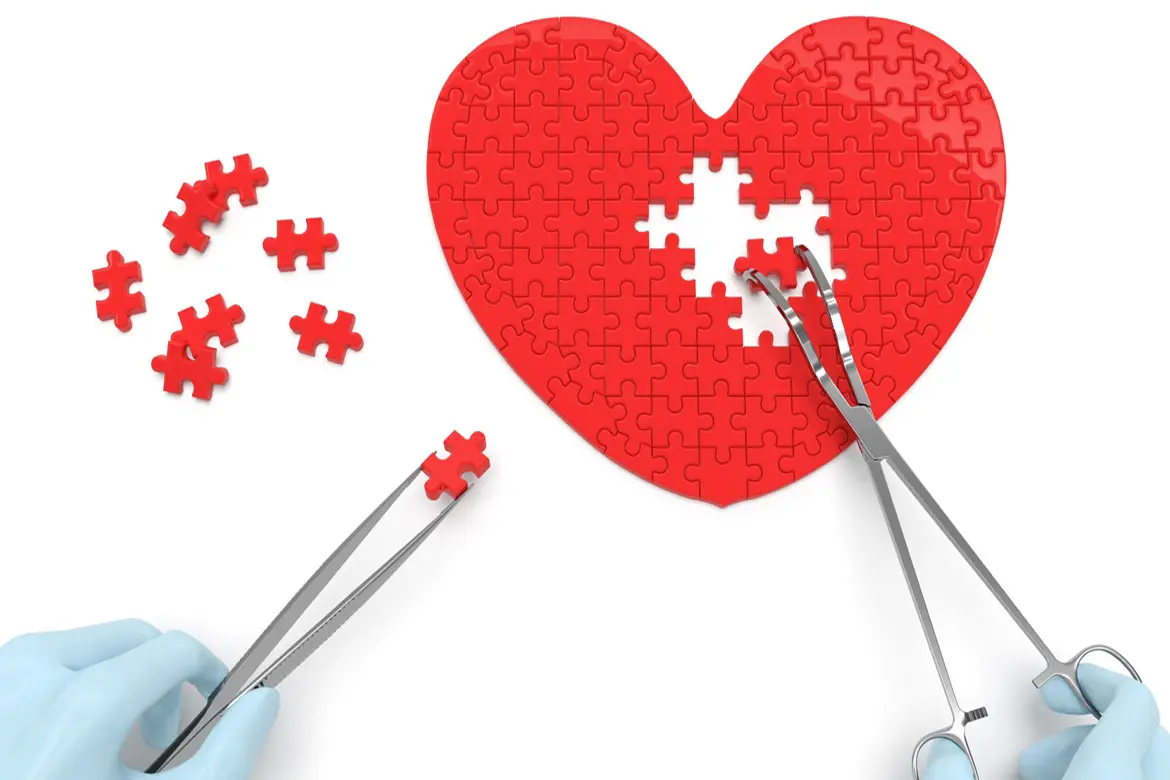
We recommend the most common heart operations to beat heart disease.
Our breast surgeon explains how to understand your risk, warning signs to know, why screening matters even when you feel well, and what surgery can look like today.

As knee osteoarthritis progresses, everyday activities can become more difficult. Our pain specialist and orthopaedic surgeon explain the treatment options available and how to find the right approach for you.

Dr Edwin Chng from Parkway Shenton explains why weight loss can slow down during medical weight management, and when it may be time to review your treatment plan.

Prostate cancer is common, often silent, and still diagnosed too late in Singapore. Urologist Dr Tan Yung Khan on what every man should know about screening, diagnosis, and treatment.

We answer common questions about haze, and how this can affect common chronic lung conditions such as asthma and chronic obstructive pulmonary disease (COPD), and 8 simple tips to protect ourselves against it.

Our neurosurgeon, Dr Vincent Ng, explains the factors specialists consider when deciding whether a brain aneurysm should be monitored or treated, and what the different treatment options involve.
Parkway East Hospital is part of IHH Healthcare, one of the world’s largest integrated healthcare networks.

Download the MyHealth360 app to access an array of medical services conveniently.


Get trusted medical advice from our specialists, dietitians and physiotherapists directly in your inbox.
Subscribe